
-
 ‘Manamela must provide proof’ – Ehlanzeni regional commissioner
-
 Arrests in Mohlala case was a charade
-
 Chaos, bitter feud between new and old owners and the collapse of a R35m lodge
-
 Administrator under pressure to fire a lodge manager facing sexual harassment allegations
-
 Former deputy police commissioner manipulating cases in retirement
-
 The rich enjoy life in eco-tourism properties while the land owners languish in poverty
-
 IDC’s refusal to issue commitment letter threats to collapse a relish and sauce company
-
 Anxious Easter moments as fuel price increase
-
 Top five ANC positions in Limpopo and Mpumalanga uncontested
-
 Service delivery failures in municipalities chase away investors - Ramaphosa
IDC roasted for being ‘anti-black’
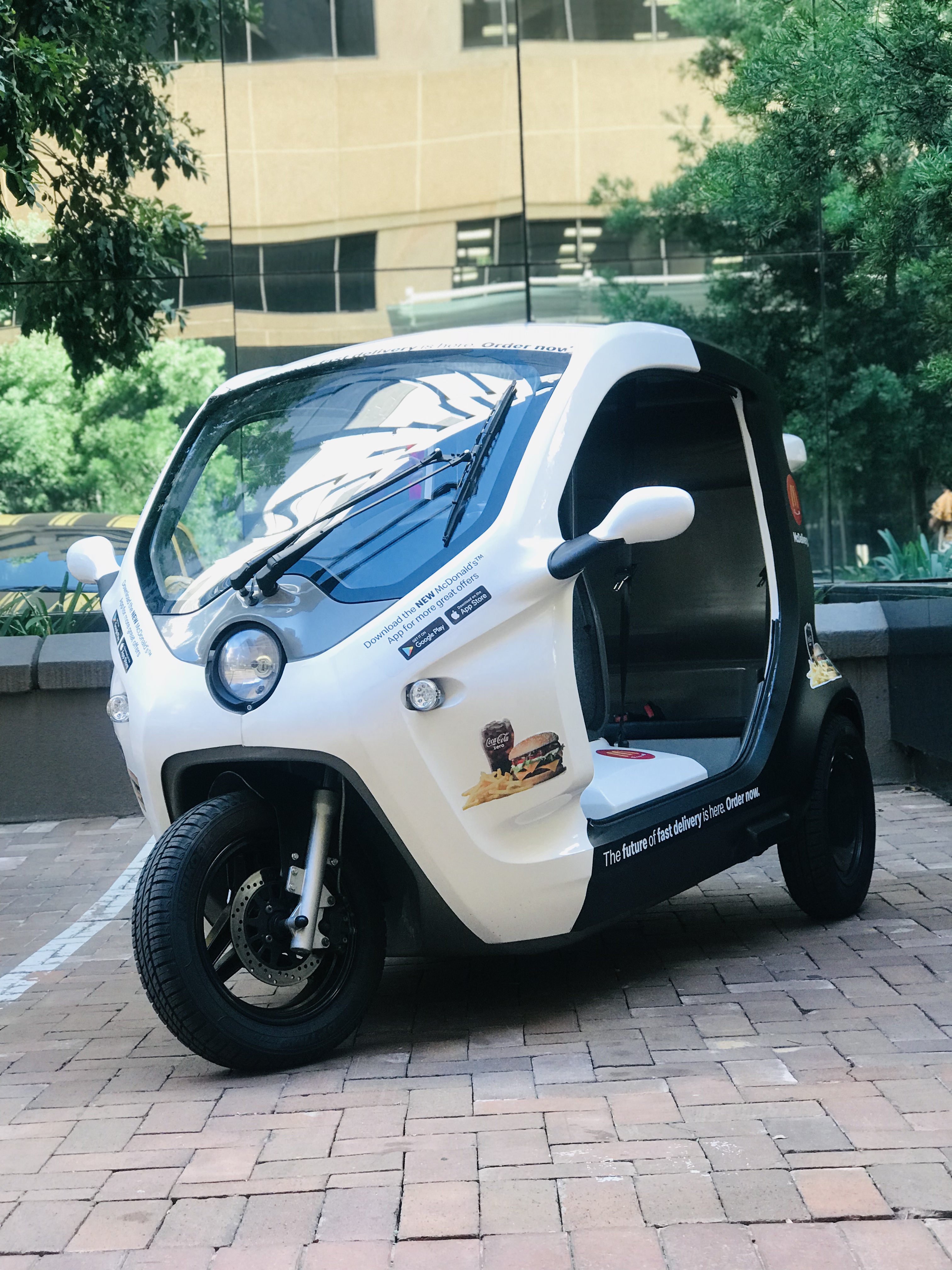
Green Scooters has deployed 70 electric vehicles to blue chip companies, local SMMEs and exported to the United Arab Emirates.
Source: X
Sizwe sama Yende
An entrepreneur has lambasted the Industrial Development Corporation (IDC) for allegedly turning down his funding application for his delivery electric vehicle business and funding a white competitor.
Green Scooters founder, Fezile Dlamini, went on a tirade this week alleging that the IDC rejected him and he spent R9.5 million from his own pocket over the past eight years to build Green Scooters, which has deployed 70 electric vehicles to blue chip companies, local SMMEs and exported to the United Arab Emirates.
While being rejected, Dlamini said, the IDC gave R69 million funding to a white-owned company (name known to The People’s Eye) in Cape Town that competed with Green Scooters – which is the first black-owned electric vehicle company.
Green Scooters is producing the vehicles for blue-chip corporate clients across quick-service restaurants, fast moving consumer goods, logistics, retail, telecoms, financial services, and e-commerce.
Dlamini has meanwhile lodged a complaint with parliament and the Public Protector.
Dlamini’s complaint follows hot on the heels of a debate by the Portfolio Committee on Trade and Industry about a presentation by the National African Federated Chamber of Commerce and Industry (Nafcoc) three weeks ago.
Nafcoc complaint highlighted the IDC’s alleged strong-handed treatment of black-owned businesses facing various financial challenges. Most parliamentarians called for an inquiry into the IDC’s “anti-black” attitude.
Dlamini said that the IDC frustrated him over the past eight years as he sought assistance even though there was an executive directive issued in 2019 to fund Green Scooters.
“Over eight years of engagement, the requirements shifted at every stage. I was asked to change my business model multiple times. I was told to come back with proof of sales before I could access the capital to make those sales. I was referred between departments in circles,” Dlamini said.
“Applications were cancelled on technicalities after months of engagement. The IDC approved approximately R69.9 million in funding for [our competitor] during a period when our own applications were being declined,” he added.
Dlamini said that he became aware of the competitor’s funding through public disclosures and information shared during his engagement with the IDC.
He said that the IDC rejected his Public Access to Information Act request to obtain comparative data in 2021. Dlamini said that his complaint did not intend to attack his competitors.
“I respect anyone who is trying to advance electric mobility in South Africa. What I have asked, and what I continue to ask, is a simple question: were the same criteria applied to both companies? If yes, show me. If not, that needs to be addressed. The parliamentary petition and the Public Protector submission deal with this in detail,” Dlamini said.
IDC’s head of corporate affairs, Tshepo Ramodibe, did not respond to questions seeking the IDC to specify the reasons for rejection of Green Scooters’ application and the criteria the company failed to meet.
City Press had also asked the IDC to clarify who applied first between Green Scooters and the competitor as an perception of collusion was being created.
“The IDC is bound by strict client confidentiality obligations, and this policy extends to the companies referenced in your enquiry. We will engage directly with the complainant,” Ramodibe said.
Dlamini said that he was, however, satisfied with Green Scooters’ growth and achievements. Dlamini said that the company has been allocated a 6 500 square metre factory at the Tshwane Special Economic Zone and would now engage in large-scale manufacturing.
He also said that the company had been awarded a subcontract to assemble electric three-wheelers for export to Nigeria, with one year volume of 2 400 units and a total pipeline of 24 000.
Green Scooters, Dlamini said, had signed a distribution agreement for 6 500 units with an UAE-based partner for the Middle East and North African market.
“Green Scooter is not defined by its funding battles. We survived without institutional support. Now imagine what we can do with it,” Dlamini said.
Dlamini said that development finance institutions needed to rediscover their mandate. “When an entrepreneur does not meet every criterion, the response should not be a rejection letter. It should be: what is missing, and how do we help you close the gap? That is what development means. Rejection is what commercial banks do.”
Dlamini added that institutions must be transparent by publishing disaggregated data of who gets funded and who does not - by race, gender, sector, and year. “If the system is working, the data will show it. If it is not, we need to know,” he said.